

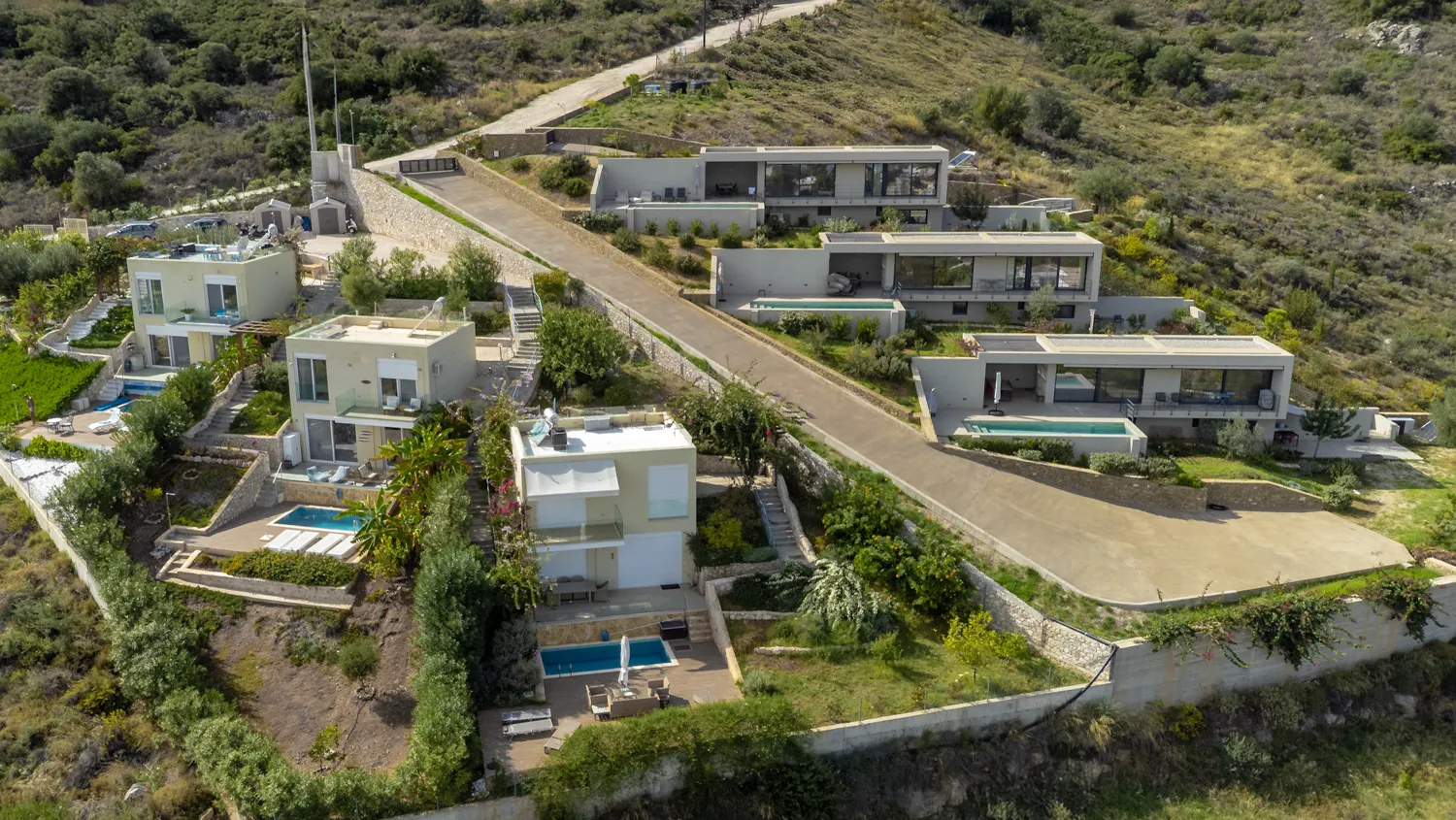
Most people dream of having a house by the sea in Europe, and Greece is one of the few places where that dream feels within reach. With beautiful beaches, dramatic landscapes, relaxed towns, and a variety of regions to choose from, the country suits many different lifestyles. The islands offer a seasonal way of living and are ideal for those who enjoy the water, while the Peloponnese combines an island atmosphere with mountains and easy year round access. Cities such as Athens, Thessaloniki, or Kalamata provide a more urban feel with strong cultural life and international connections.
Can Foreigners Buy Real Estate in Greece
The short answer to can foreigners buy property in Greece is Yes. However, buying a home does not automatically give the right to live in the country permanently. In this article each part of the process will be explained clearly, from legal requirements to practical steps, so that buyers understand exactly how foreign ownership works in Greece.
For anyone wondering can foreigners buy property in Greece, the answer is Yes. Foreigners can legally buy property in Greece, and the rules are clear for both EU and non EU nationals. The legal framework allows international buyers to purchase apartments, houses, land, and commercial spaces with very few limitations. This applies equally to those buying real estate in Greece as a non EU citizen, as long as the small number of special border zones is not involved.
EU and Schengen Buyers
Citizens of EU and Schengen countries face no restrictions at all. They can buy any type of property, in any part of the country, and the process is identical to that of a Greek citizen.
Non EU Buyers
Non EU nationals can also buy freely in almost the entire country. The only exception is a small number of designated border areas that require an additional permit from the local authorities. These zones represent a very small percentage of Greece, and most popular regions such as Athens, Thessaloniki, the Peloponnese, Crete, and many island destinations do not fall under this rule. This means that buying real estate in Greece as a non EU citizen is generally a straightforward process.
Ownership Rights
Once the purchase is complete, foreign buyers receive full and permanent ownership. Properties can be bought under a personal name or through a company, and owners are free to rent them out, sell them in the future, or pass them on to family members.
Who Is Considered a Foreigner Under Greek Law
Greek property law separates buyers into two broad categories: EU citizens and non EU citizens. This distinction exists mainly for administrative reasons and does not affect what type of property someone can own.
EU Citizens
Buyers from EU or Schengen countries are treated the same as Greek nationals when it comes to purchasing real estate. They do not require any special permits and can buy, sell, or hold property without limitations.
Non EU Citizens
Buyers from outside the European Union are also allowed to own property in Greece. The rules are almost identical, with the only additional step being the permit required in a few designated border regions. Since most parts of the country are not affected by this rule, the majority of international buyers experience no difference in the process when buying real estate in Greece as a non EU citizen.
Companies and Trusts
Properties can also be purchased through a foreign company, provided the company structure is transparent and the owners can be clearly identified. Greece accepts both EU and non EU corporate entities as long as they follow the standard documentation requirements.
The Documents You Need
To buy property in Greece, every foreign buyer must prepare a few essential documents. The list is short, and most of the process can be handled remotely through a lawyer if needed.
Passport or National ID – A valid passport is required for non EU buyers. EU citizens can also use their national ID card.
Greek Tax Number (AFM) – The AFM is mandatory for any property purchase. It is issued by the tax office and can be obtained in person or through a power of attorney. This number is used for all property related transactions, taxes, and long term ownership records.
Greek Bank Account – Most buyers open a Greek bank account for transferring funds, paying taxes, and covering future utility bills. Although some transactions can be done without one, having a local account simplifies payments and is recommended.
Proof of Funds – Banks and notaries require documentation that shows the legal source of the purchase funds. This usually includes bank statements or official confirmation from the sending bank.
Power of Attorney (Optional) – Many international buyers choose to issue a power of attorney to their lawyer, especially if they cannot be in Greece during the process. This allows the lawyer to obtain the AFM, open the bank account, sign preliminary agreements, and complete the final contract on behalf of the buyer.
The Buying Process Step by Step
Buying real estate in Greece is a well established procedure guided by notaries and lawyers. The steps are clear, and most of the work is handled by professionals, which makes the process accessible even for buyers who are not in the country and for those moving to Greece and buying property for the first time.
1. Property Selection and Offer
Once a property is chosen, the buyer submits an offer through the agent or directly to the seller. When both sides agree on the price and terms, the process moves forward.
2. Legal Checks by the Lawyer
The buyer’s lawyer performs a full legal due diligence. This includes checking ownership, confirming that the property is free from debts or encumbrances, reviewing building permits, and ensuring the property can legally be sold. This stage is essential for protection and is standard practice in Greece.
3. Deposit and Preliminary Agreement
Some transactions involve a small deposit to secure the agreement until the final contract is prepared. The deposit is usually held by the notary or the agent and is refundable only under specific conditions agreed in advance.
4. Collecting Documents From the Seller
The seller must provide several certificates before the sale can proceed. These include the property tax clearance, technical certificates, and in many cases an engineer’s report confirming that the building matches the plans. The notary reviews everything before preparing the contract.
5. Signing the Final Contract
The final sale contract is signed at the notary’s office. Both parties, or their legal representatives through power of attorney, attend the signing. The notary reads the contract aloud, confirms the details, and supervises the transfer.
6. Payment and Transfer of Ownership
Payment is usually made by bank transfer on the day of signing. Once the contract is signed and the transfer tax is paid, the notary registers the property with the Land Registry or Cadastre. Registration is the final step, and from this moment the buyer becomes the official owner.
7. Post Purchase Steps
After registration, the new owner arranges utilities, updates the tax authority with the property declaration form, and keeps the purchase records for future tax use. These tasks can also be handled by a lawyer or accountant.
Costs Involved in Buying Property in Greece
When buying property in Greece, the main costs are predictable and follow a standard structure across the country. Most expenses are linked to the legal process and taxes, and buyers can estimate the total budget with good accuracy before committing.
Transfer Tax
Most properties are subject to a transfer tax of 3 percent of the declared purchase price. This tax is paid once, before signing the final contract. New builds that fall under VAT rules are taxed differently, but VAT on new construction is currently suspended in many cases, which makes the 3 percent transfer tax the most common scenario.
Notary Fees
The notary prepares and oversees the final contract. Fees are usually calculated as a small percentage of the purchase price, often between 0.7 and 1 percent, depending on the complexity of the transaction and the length of the contract.
Lawyer Fees
A lawyer represents the buyer throughout the process, carries out the legal checks, and ensures the property has no outstanding issues. Legal fees normally range from 0.8 to 1.5 percent of the property price, based on the work required.
Land Registry or Cadastre Fees
Once the sale is completed, the property must be registered. Registration fees are approximately 0.5 to 0.7 percent. In areas where the Cadastre is fully implemented, the process is more streamlined, but the cost remains similar.
Agent Commission
In Greece, agency commissions are typically shared between buyer and seller, although this depends on the agreement. Buyers usually pay around 2 percent, but the rate can vary by region and by agency.
Annual Property Tax (ENFIA)
After the purchase, the owner pays a yearly property tax. The amount depends on the size, location, and characteristics of the property. For most homes, ENFIA is moderate compared to other European countries.
Can Foreigners Get a Mortgage in Greece
It is possible for foreigners to obtain a mortgage in Greece, but the process is more demanding than a straight purchase with cash. Greek banks are cautious when dealing with international buyers, particularly those without income in Greece or who are not residents, especially when buying real estate in Greece as a non EU citizen.
What the Banks Look For
To secure financing, applicants typically must provide proof of stable income (often over several years) along with tax returns, bank statements, and credit history from their home country. Banks will also require a significant down payment (often 30 %-40 % of the purchase price for non-residents) before approving a loan.
Loan-to-Value and Term Limits
Many banks lend only up to 60 %-70 % of the lower of the purchase price or the appraised value of the property (for foreigners). The maximum loan term for non-resident or foreign buyers is often shorter (for example up to 15 years) compared to Greek residents.
Income Requirements and Practical Expectations
Greek banks do not publish a specific minimum income threshold for foreign buyers, and each application is assessed on a case by case basis. In practice, applicants are expected to demonstrate a stable and well documented income that clearly supports the repayment of the loan. Many banks informally consider annual earnings in the range of €30,000 after tax or more as a level that reflects sufficient financial stability, but this is not an official rule and should be treated only as a guideline. What matters most is the overall financial profile, including employment history, existing debts, available assets, and the size of the deposit.
Interest Rates and Practical Considerations
Interest rates for mortgages in Greece have been competitive but vary significantly depending on the borrower’s profile. For foreign buyers, expect somewhat higher spreads or stricter terms. Also, because many international buyers pay cash or part-cash, mortgages are still relatively rare in Greece compared with other European markets.
Buying Real Estate and Residency in Greece
Buying property in Greece does not automatically grant the right to live in the country long term. Foreign buyers receive full ownership of the property, but residency rights are a separate legal process. This is important for anyone moving to Greece and buying property, as the residency pathway must be handled separately. There are several pathways available, each designed for different types of stays and different nationalities.
Greek Golden Visa
The Golden Visa is the most well known residency route linked to property investment. It grants a five year renewable residence permit to non EU citizens who purchase eligible real estate. The minimum investment threshold varies by region, with higher amounts required in central Athens, Thessaloniki, Mykonos, and Santorini. In many other areas, including large parts of the Peloponnese, the required investment is lower. The permit allows free movement within the Schengen Zone and can include family members.
Digital Nomad Visa
Remote workers from non EU countries can apply for the Digital Nomad Visa, which allows them to live in Greece while working for employers or clients abroad. A stable income is required, along with health insurance and proof of remote employment. This visa does not require property ownership but is often used by buyers who plan to live in Greece part of the year.
Long Stay National Visas
Buyers who want to spend extended periods in Greece can also apply for long stay national visas, which allow stays longer than the standard three months permitted under the Schengen rule. These visas are available for several purposes, including financial independence, study, or family reasons, and each has its own requirements.
Residency for EU Citizens
EU and EEA citizens do not need a visa to live in Greece. They can move freely, stay indefinitely, and register locally if they plan to reside long term. Property ownership is not required, but it often makes the settlement process easier.
Things to Know Before Buying
Buying real estate in Greece is straightforward when the steps are followed correctly, but there are a few practical points that can help buyers avoid surprises. These factors are not obstacles, but understanding them early makes the process smoother and sets realistic expectations.
Renovation and Construction Costs
Properties in Greece vary widely in condition. Renovation costs can range from modest updates to full structural work, especially in older homes or rural properties. Labour and material prices are generally lower than many Western European countries, but the timeline for permits, approvals, and contractor availability can be longer, particularly in summer and on the islands.
Utility Setup
Electricity, water, and internet connections are straightforward to arrange, yet they require a tax number and local documentation. Some utility providers process new contracts quickly, while others may take several days, especially if previous bills need to be settled by the seller.
Coastal Regulations
Properties close to the sea are affected by coastal zone regulations. These rules protect the shoreline and define building limitations, set back distances, and what can be constructed or renovated. For homes that are already built, this is usually not an issue, but for land purchases it is important to confirm the exact building rights before committing.
Rural Land and Zoning
In rural or agricultural zones, building rights depend on the size and classification of the land. A plot is not automatically buildable just because it is privately owned. In many regions, the minimum plot size required for development is 4,000 square metres, and in some areas it can be even larger or subject to additional conditions. The land may also need official road access or specific zoning designations. Because of these rules, an engineer’s check is essential before committing to any land purchase.
Seasonal Accessibility
Some areas, especially smaller islands or mountainous villages, feel very different in winter compared to summer. Ferry schedules change, local shops may close off season, and travel times can be longer. Buyers planning year round use should consider how accessible the location is outside peak months.
Tourism Considerations
If the property will be rented, buyers should understand the local rental market, licensing requirements, and seasonal demand. Some municipalities require short term rental registration, while others have specific rules for apartments in shared buildings.
Experience and Local Insight
Greece attracts a wide range of international buyers, from those seeking a holiday home by the sea to families looking for a quieter lifestyle or a base in the Mediterranean. Many begin by asking can foreigners buy property in Greece, and quickly discover that each region has its own character and practical considerations. The property market is diverse and each region offers something different, which is why informed guidance makes a noticeable difference during the search and purchase process, especially for those moving to Greece and buying property for long term living.
Professionals who work daily with foreign buyers see the same recurring patterns. Most newcomers underestimate how varied Greece is from one region to another, not only in architecture and landscape but also in bureaucracy, building rules, and seasonal rhythms. Areas that feel lively and convenient in summer can be quieter in winter, while the Peloponnese offers a more balanced year round lifestyle with easier access compared to many islands.
Another common observation is how important due diligence is. Legal checks, engineer inspections, and clear documentation protect the buyer and ensure a smooth registration. When handled correctly, the process is reliable and predictable. When rushed, it can lead to delays or unexpected costs.
There is also a growing trend of international buyers looking for long term opportunities rather than purely holiday use. Many prefer homes that can support remote work, extended stays, or future relocation plans. This shift has created more interest in areas with good infrastructure, year round services, and strong access to Athens Airport.
Mediterra Premium focuses on connecting foreign buyers with the right regions, offering clarity on what to expect, and simplifying the steps involved in purchasing and settling in Greece. The goal is always to provide trusted local insight that helps buyers make confident and informed decisions.
Greece remains one of the most appealing destinations in Europe for foreign property buyers. The legal framework is clear, ownership is secure, and the process is well supported by notaries, lawyers, and engineers who specialise in working with international clients. While residency and property ownership follow separate rules, buyers from both EU and non EU countries can purchase homes, land, or investment properties with relative ease when the correct steps are followed. This applies equally to those buying real estate in Greece as a non EU citizen, as the process is stable and well defined across most regions.
Understanding the key points — from documents and due diligence to taxes, financing options, and regional differences — helps set the right expectations from the beginning. With proper guidance and a realistic view of local procedures, buying property in Greece can be a smooth and rewarding experience, whether the goal is a holiday home, an investment, or a long term base in the Mediterranean. This clarity is especially important for anyone moving to Greece and buying property, as long term plans require both ownership and the correct residency pathway.