

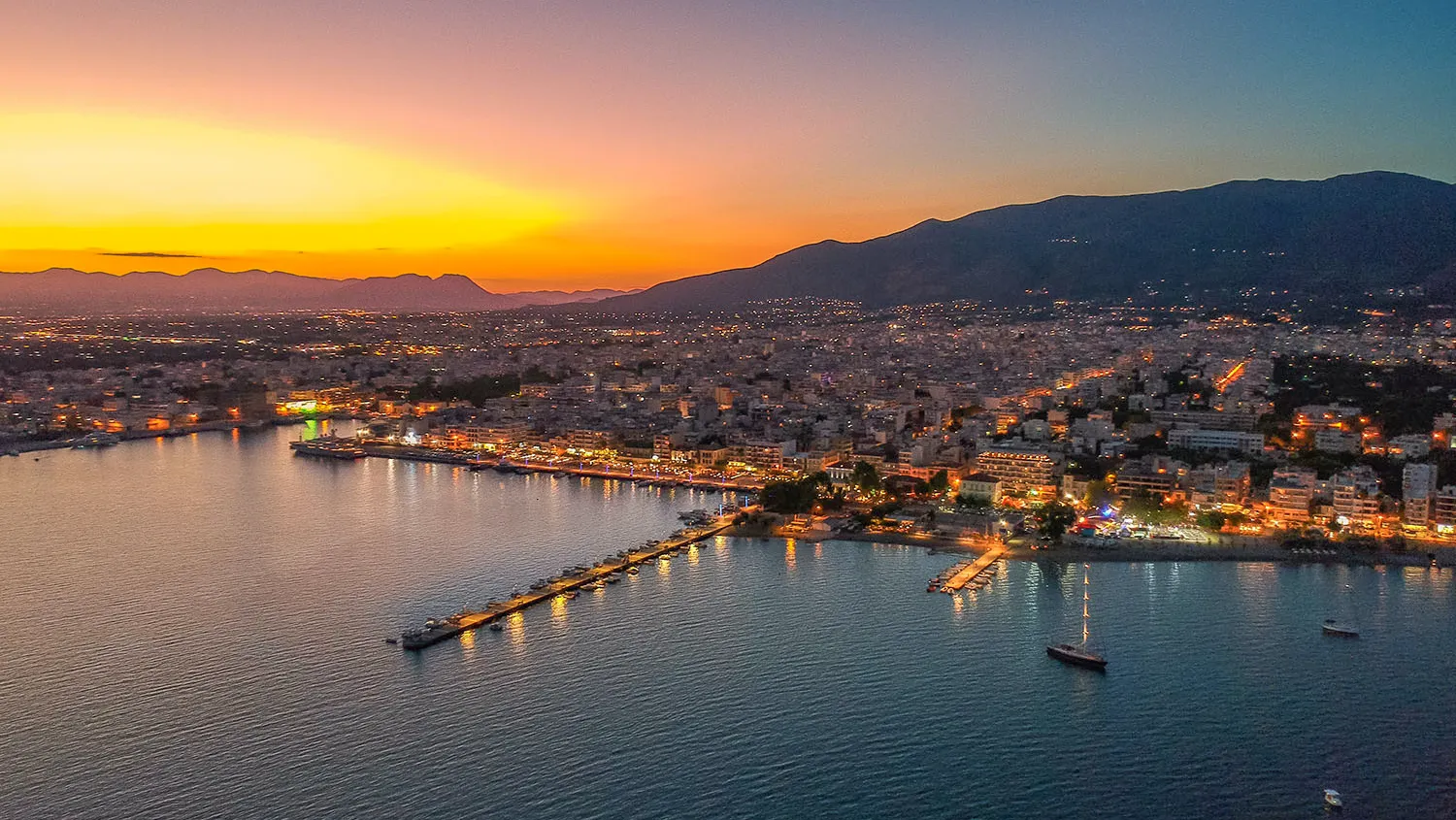
Living in Kalamata was my introduction to the Peloponnese and, in many ways, it shaped how I understand life in southern Greece today.
When my fiancée and I decided to move to mainland Greece, we flew into Athens, rented a car, and drove directly to Kalamata as our starting point. I arrived without strong expectations, but what I found was a city that immediately felt different from Athens. It was more relaxed, easier to navigate, yet still very much a real, functioning Greek city rather than a seasonal destination.
We stayed at Messinian Icon, a hotel set above the city with open views across Kalamata and the Messinian Gulf. Below us, the long promenade followed the coastline, with the Taygetos mountains rising behind it. That constant presence of both sea and mountains is one of the defining features of living in Kalamata and continues to shape the city’s identity.
A brief look at Kalamata’s history
Kalamata is one of the most important cities in the Peloponnese and is often regarded as the second largest city in the region after Patras. It holds a significant place in modern Greek history, particularly during the Greek War of Independence, as one of the first cities to be liberated in 1821.
Over time, Kalamata developed into an administrative, commercial, and agricultural centre closely connected to the fertile Messinian countryside. This long standing role explains why living in Kalamata feels stable and self sufficient. The city does not rely solely on tourism and functions year round as a working regional hub.
What living in Kalamata feels like day to day
Living in Kalamata sits somewhere between coastal town life and regional city living. Certain areas are lively and commercial, while others feel calm and residential. This balance is one of the city’s strongest qualities, particularly for people relocating to Greece who want practicality without sacrificing lifestyle.
The city is easy to move around, with many neighbourhoods walkable and the sea integrated into everyday life rather than existing on the outskirts. At the same time, the surrounding mountains and countryside are always close, creating a sense of space that is often missing in larger cities.
Dining, everyday life, and services
One of the major advantages of living in Kalamata compared to many other towns in the Peloponnese is the range of dining options and everyday services available throughout the year.
While much of the Peloponnese is centred around traditional tavernas, Kalamata offers a noticeably more international food scene. Alongside classic Greek dining, there is a wide choice of restaurants, modern cafés, brunch spots, and casual dining venues that would feel familiar to anyone coming from a larger European city.
Brunch culture is particularly well established, especially around the city centre and the promenade. Cafés are part of the city’s daily rhythm rather than seasonal businesses, used equally by locals and long term residents.
From a practical perspective, living in Kalamata is also easy when it comes to essentials. The city has several large supermarkets, including national chains, spread across different neighbourhoods. Combined with local bakeries, street markets, and specialist food shops, this level of infrastructure is a key reason why Kalamata works so well for year round living rather than short stays.
Best areas for living in Kalamata
Marina and Paralia Kalamatas
This area offers the most lifestyle driven version of living in Kalamata. With direct beach access, a long promenade, cafés, and restaurants, it attracts both locals and foreign residents. Importantly, it remains active throughout the year rather than becoming purely seasonal.
What you find
• Mid to large apartment blocks
• Modern and renovated apartments
• Penthouses with sea views
Most properties are:
• Apartments rather than houses
• Balconies are a key feature
• Higher floors command a premium
New developments continue to appear, especially inland from the front line.
Who it suits
• Lifestyle buyers
• Remote workers
• Short term and mid term rental investors
This is the most internationally appealing area of Kalamata.
City Centre
The city centre suits those who want residential living alongside shops, offices, schools, and services. Everything is close by, while the seafront remains easily accessible. It is a practical option for people relocating and wanting convenience.
What you find
• Older apartment buildings from the 1970s to 1990s
• Renovated flats mixed with untouched units
• Limited new builds
Properties are:
• Practical rather than scenic
• Often smaller layouts
• Excellent for year round living
Parking can be a challenge, but convenience is unmatched.
Who it suits
• Year round residents
• Long term rentals
• Buyers prioritising services over views
This is where Kalamata feels like a functioning city.
Old Town
Kalamata’s Old Town sits just north of the modern commercial centre. It is relatively small but full of character, with traditional architecture, tavernas, and a more historic atmosphere. It appeals to those who value authenticity and charm.
What you find
• Traditional stone houses, often renovated
• Small apartment buildings
• Neoclassical properties in limited supply
Homes here are usually:
• Smaller in size
• Character driven rather than modern
• Not always with parking
Who it suits
• Buyers who value history and authenticity
• Long term residents
• People who enjoy walkability and local life
This area feels distinctly Greek and is less focused on short lets.
Verga and Mikri Mantineia
These elevated areas to the south east of Kalamata are ideal for villa living. They offer privacy, space, and exceptional sea views while still being within easy reach of the city. For buyers seeking views without isolation, this is one of the strongest options for living in Kalamata.
Lower Verga
What you find
• Newer apartments and maisonettes
• Modern villas with pools
• Gated style developments in some cases
This area offers:
• Sea views
• More space than the centre
• Better parking and privacy
Upper Verga
What you find
• Detached houses
• Larger plots
• Traditional homes mixed with modern villas
Homes here are:
• Car dependent
• More private
• Cooler in summer
Who Verga suits overall
• Higher end buyers
• Families
• Buyers prioritising views and space over walkability
Verga is residential, not urban.
Golf and Costa Navarino
Living in Kalamata is particularly attractive for golfers due to its proximity to Costa Navarino, one of Europe’s most recognised golf and lifestyle resort destinations. Located around one hour away by car, it allows residents to enjoy world class courses while still living in a real city rather than inside a resort.
This balance appeals strongly to those looking for a year round base with access to premium leisure facilities.
Beaches around Kalamata
Kalamata Beach runs directly along the city and works well for daily swimming and casual beach life. South of the city, the coastline becomes quieter and less urban.
Beyond Kalamata itself, Messinia is home to some of the Peloponnese’s most impressive beaches, including Voidokilia, Foneas, Santova, Stoupa, and Kalogria. The variety of beaches is a major part of the appeal of living in Kalamata and the wider region, and it is a topic worth exploring in more detail separately.
Airport access and connectivity
Kalamata International Airport is a major advantage, particularly for relocators and second home owners. Although routes are more seasonal than Athens, the airport significantly reduces travel time compared to many other Peloponnese locations.
Athens International Airport is approximately two and a half to three hours away by car. Road connections are good, making travel to Athens and across the Peloponnese straightforward.
Is living in Kalamata right for you
Living in Kalamata suits those looking for a genuine Greek city with a coastal lifestyle, without the intensity and scale of Athens. It works well for year round living, offers strong property value, and provides easy access to beaches, golf, and nature.
For anyone considering a move to the Peloponnese or searching for a holiday home that remains practical beyond the summer season, Kalamata stands out as a balanced and highly livable choice.